Africa Today would like to thank those who participated in the “African Intellectuals in the West” forum, and making it a success. If you did not get a chance to attend the forum, you can listen to it on our website.
To improve upon our events we have posted a survey at the link below. Please fill it out and keep checking our website on any updates of our upcoming events.
Listen to forum
Fill Survey
Thank you,
Agwua Omot,
Africa Today
agwua@africatodaymn.org
651 210 0296
Monday, June 1, 2009

Wednesday, March 4, 2009
Upcoming Forums
African Intellectuals in the West
Friday, May 29th, 2009 from 6:00PM to 8:00PM
Are African Intellectuals in the West a benefit to the rest of Africa? The panel will examine the complex roles that African intellectuals play in higher education institutions in 21st century Western society. Come and participate in this stimulating conversation during our May 2009 Exchange Forum at the Brian Coyle Community Center.
Our guest panelists will be:
Dr. Solomon Gashaw,
Associate Professor of Sociology
University of Minnesota, Morris
Dr. Samuel Zalanga
Associate Professor of Sociology
Bethel University
What does it mean to be an African in America?
Friday, June 26th, 2009 from 6:00PM to 8:00PM
Gender role dynamics within African Immigrant communities
Friday, July 31st, 2009 from 6:00PM to 8:00PM
Sustaining African Cultures - Film Night
Friday, September 25th, 2009 from 6:00PM to 8:00PM
How do Africans see race in the west?
Friday, October 30th, 2009 from 6:00PM to 8:00PM
Revisiting Obama's Presidency
Friday, November 27th, 2009 from 6:00PM to 8:00PM
Sustaining African Cultures - Film Night
Friday, January 29th, 2010 from 6:00PM to 8:00PM
Join us for the above events at Brian Coyle Community Center
420 15th Avenue S.
Minneapolis, MN 55454
To register to attend, click here
For questions call 612-423-0435 or email agwua@africatodaymn.org
Friday, May 29th, 2009 from 6:00PM to 8:00PM
Are African Intellectuals in the West a benefit to the rest of Africa? The panel will examine the complex roles that African intellectuals play in higher education institutions in 21st century Western society. Come and participate in this stimulating conversation during our May 2009 Exchange Forum at the Brian Coyle Community Center.
Our guest panelists will be:
Dr. Solomon Gashaw,
Associate Professor of Sociology
University of Minnesota, Morris
Dr. Samuel Zalanga
Associate Professor of Sociology
Bethel University
What does it mean to be an African in America?
Friday, June 26th, 2009 from 6:00PM to 8:00PM
Gender role dynamics within African Immigrant communities
Friday, July 31st, 2009 from 6:00PM to 8:00PM
Sustaining African Cultures - Film Night
Friday, September 25th, 2009 from 6:00PM to 8:00PM
How do Africans see race in the west?
Friday, October 30th, 2009 from 6:00PM to 8:00PM
Revisiting Obama's Presidency
Friday, November 27th, 2009 from 6:00PM to 8:00PM
Sustaining African Cultures - Film Night
Friday, January 29th, 2010 from 6:00PM to 8:00PM
Join us for the above events at Brian Coyle Community Center
420 15th Avenue S.
Minneapolis, MN 55454
To register to attend, click here
For questions call 612-423-0435 or email agwua@africatodaymn.org
2009 Connecting with Africa Conference Call for Presentations

BRAIN DRAIN:
Is Africa Losing Its Best and Brightest?
Human migration is inevitable. In the case of Africa, the effect of outbound migration is yet to be measured. Does the exposure of Africans to western ideals and cultures benefit or exploit the human resources that could be used to improve quality of life back in African nations. The third annual Connecting with Africa Conference is in search of a better understanding of what this means for the future of Africa. This year we will explore the theme "Brain Drain: Is Africa Losing its Best and Brightest?"
Join us at Metropolitan State University on Friday, August 21, 2009.
CALL FOR PRESENTATION
The conference Planning Committee seeks proposals for workshops, demonstrations, round table discussions, etc., by individuals and groups on a variety of topics including but not limited to the following:
* Ethnic Tension and its Consequences
* Impact of Immigrants in America
* Social Classicism
* Women and Development
* Case Study of Brain Drain
* Inter-generational Conflict
If you wish to be considered for one or more presentation, please follow the link below to fill out the registration form.
Register to be considered for one or more presentations (Deadline is July 31, 2009)
Attend the conference (Deadline for online registration is August 19, 2009)
Host an exhibit
Advertise
Volunteer
Read about 2008 conference
For questions call 651-793-1777 or e-mail daniel.abebe@metrostate.edu
Tuesday, March 3, 2009
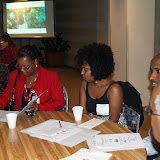
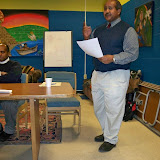
January 2009 Forum: Impact of Obama’s Presidency on Africa
 |
| Click to view album |
On the evening of October 4th 2008, the global community was synchronized in a plethora of emotions when it was announced that Barack Obama had been elected to be the 44th president of the United States of America. The emotions ranged from triumph to disappointment. In the Pan-African community it was predominantly the former. For the first time since the civil rights movement, colonial independence, and the release of Nelson Mandela from prison there is a unifying voice for this community to relate with.
Even though his inauguration is not until January 20th, 2009, his victory has raised the bar for expectations, while concurrently lowering the tolerance for disappointment towards Africa, its leaders and citizens. The effectiveness of his administration concerning the Pan-African community will be measured by a) initiatives to improve quality of life for oppressed Africans, b) disciplinary sanctions for vain African political leaders, and c) African and American relations beyond capitalism and relief-organizations.
In order for Africa to evolve mutually, it is a necessity that the Pan-African community participates and become an agent of change. Barack Obama has played his role towards inspiring the masses. Only time will tell if his legacy will be legendary or forgettable, and the degree of involvement by the Pan-African community will be significantly responsible for either scenario.
Instability in Nothern Uganda
 Presented by Richard Oketch
Wednesday, June 6, 2007, 06:00 PM
OVERVIEW
* A humanitarian crisis that demands sustained focus
* By 2006, some 25, 000 children had been forced to serve as solders and sexual slaves. Up to 2 million people had been placed in camps where they live in fear and squalor
* Few horror stories rival the humanitarian crises in northern Uganda. A tale of astonishing suffering and massive displacement, are all taking place in a country hailed as one of Africa's development success stories.
* Yet a northern Uganda's nightmare had been largely ignored by the international community, even as the crises in neighboring Sudan generates worldwide and a steady flow of headlines.
* By march 2005 (by Alert-Net) northern Uganda merged as the worlds second worst "forgotten" humanitarian hotspots after the Democratic Republic of Congo
* Child soldiers are estimated to make up to 80% of the Lars fighting force
* Twenty years - Northern Ugandans have been socially, economically and politically weakened. But the intrigue remains - the government is still afraid
* Many UN resolutions have passed, press statements made and security council resolutions have been in place since January of 2003, but a comprehensive peace strategy remains elusive
* Ongoing peace negotiation following the ceasefire November 2004, reviewed May 2005, July 2006 and with truce request August 2006
* The ICC arrest warrants could derail the peace process. Is Peace Within Reach?
* What do the victims think?
THE PROBLEMS
The problems of northern Uganda, one of the world's worst neglected humanitarian crises, and one of the biggest scandals of this century have been due to man made problems as follows:
1. The LRA (The Lords Resistance Army)
Formed in 1987 and on going as a paramilitary group opposed to the NRA and headed by a cult spiritual leader called Joseph Kony who had replaced another Holy Spirit movement leader Alice Auma Lakwena. Army commander Odong Latek who had survived the onslaught of the Uganda People's Defense Force (UDPF) at the protected camps for retreated solders, advised Kony to adopt a conventional guerilla war tactics.
Problem: Former service officers were then being selectively arrested and killed by UPDF and other placed in protective camp. Those who escaped the Uganda UPDF eventually regrouped and after negotiation with the government thought their political leaders failed these people just went ahead and joined LRA Kony.
The results were total unbelievable human sufferings and chaos. The LRA embarked on massive killings of the civilians willfully, and began forceful recruitments and abduction of children and adult, terror tactics, mutilations, rape, gang rape, abductions of school girls and boys, Systematic and sanctioned abuses.
2. The UPDF (The Uganda Peoples Defense Force)
UPDF is a group from Ugandan government army that began their adventure north in pursuit of the retreating Obote Soldiers. "Operation North" began in 1991. Up to this time the retreating Acholi soldiers remained defiance and refused to disarm. To avoid bloodshed their compatriots, the Langis, on the other had decided against resisting the advancing UPDF and went on to disarm themselves and collected thousands of weapons which were then handed over to the government.
All the same the northern people were seen with suspicion and hatred by the UPDF therefore killings of civilians became a trend. Summary executions of the so called collaborators, torture and other mistreatments, arbitrary arrests and detentions, highway robberies became frequent by some bad elements of the army which were then blamed on the LRA. Formation of government local Defense Force made of young men to protect the camps did not help anyone. Example of this case was an incident February 21, 2004, the Rhino boys (Amuka) militia ran for their lives instead of defending one IDP camp near Lira. 200 people were killed by the LRA on that day.
3. The Government's forced displacement of civilians into camps
A government has the duty to protect its citizens. This has not been the case in northern Uganda where the government has instead continued to act with impunity, therefore not following international laws. Which says: Taking all feasible precautions to protect the civilian population under their control against the effect of conflicts". International human rights law on one hand prohibits forced displacement of civilian population for reasons connected to conflicts except when done for the security of the civilians.
4. The lack of protection for civilians
The Ugandan government has no system, department or institutions in place, designated for the purpose of dealing with IDP camps in place. No known budget in the name of IDP camps or anything.
Lack of police presence in Northern Uganda generally is a major problem. The police are supposed to prevent to commission of offenses and bring offenders to justice even thought they are not expected to fight the LRA, but should be expected to investigate criminal violations. No effective accountability structures exist in these camps. Local civilian officials are toothless as the army tends to rule over every affair in the North. Reports of UPDF abuses rarely result in any investigation or prosecution. People live with fear of intimidation, repercussions and harassment.
5. The Humanitarian and Health Crises
The frequency of death for all ages is staggering
Extreme squalor
Lack of efficient sanitation
Water borne diseases like cholera and dysentery
Malaria
Malnutrition and starvation or diseases of poverty
Sleeping sickness
Tuberculosis - TB
HIV/AIDS
The deaths from all the mentioned diseases are similar to death related to HIV/AIDS. In other words, disease of poverty equally destroys the immune systems, so that every death that reflects the condition of AIDS is assumed to be the result of HIV/AIDS. One should not be surprised, people in Northern Uganda have gotten used to their lives of suffering, and the resiliency is amazing. It is often said that Happiness is a state of being, and Unhappiness is a way of thinking. In Northern Uganda, one cannot afford both.
CONCLUSION
Twenty years of war and sufferings, Northern Ugandans have been socially, economically and politically weakened, but the intrigue remains - the government is still afraid for nothing.
There are 6500 Non Governmental Organizations' (NGOs) in Uganda today and a very large portion of them have something going on in Northern Uganda. Unfortunately the problems of Northern Uganda became more of a business than a clear humanitarian issue. Many people have made money and the government has made millions in the name of fighting the LRA and so the story continues
Issues to be Addressed
* Children and youth - youth capacity building
* Community education
* Non-formal education
* Education and cultural activities
* Village savings and loan associations
* Sports and life skills
* Food security and livelihoo
* Water and sanitation
Subscribe to:
Posts (Atom)
